Interview
Mr. Chi-Chung Chen (former head of the ministry of agriculture)
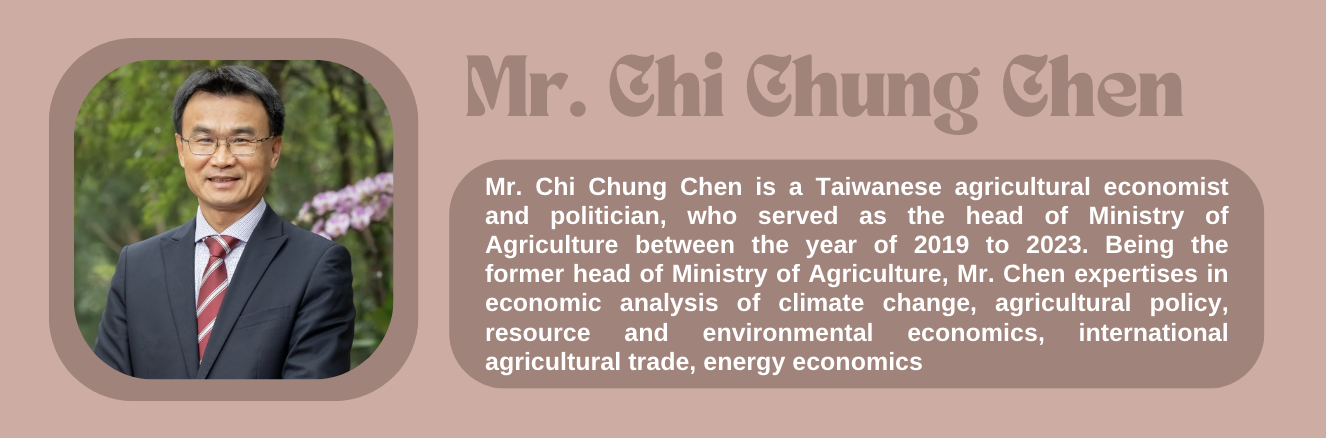
We interviewed Mr. Chi-Chung Chen, and his conclusion is agriculture based on production technology. He explained that "weather" is short-term, while "climate change" is long-term. Our products are adaptation strategies to climate change, with different time scales. According to Mr. Chi-Chung Chen's prediction, the temperature will rise by 1.5 degrees Celsius in 2040. This obviously means that the temperature will have a greater impact on Taiwan, and it will have the most severe impact on agriculture. Summers are getting longer and winters are getting shorter, and the temperature differences between seasons cause poor harvests. Rice ears are very sensitive to temperature differences, eggs cannot be laid because they are too hot, and cows cannot produce milk because of the heat. These have a great impact on society. It not only affects farmers, but also affects consumers, and it also affects the ecology. Biodiversity responds less, and things like habitat changes for native plants and endangered animals can Happen.
Mr. Chi-Chung Chen specifically explained to us the impact of climate change on agriculture. First of all, this must have a global impact, and the impact on Taiwan is equally significant. Taking the impact of climate change on Taiwan's agriculture as a case study, it highlights why the 2050 net-zero goal must be achieved. Greenhouse gas emissions and absorption. Although Taiwan's land area is small, its impact is significant. Let's go back to promoting people, countries, units, and families to work together to achieve the goal of net zero and carbon neutrality, so that the world can operate sustainably. Of course climate change is absolutely negative for the world. In addition to temperature and rainfall, events such as fewer rainy days, extreme weather, rising sea levels, melting icebergs, ocean expansion, submergence of island countries, submergence of low-altitude farmland, El Niño phenomenon, etc.
The impact on agricultural products is an increase in costs and prices. FAO: 900 million people don’t have enough to eat. The climate cannot be compensated by anyone, and it is also the connecting point between countries and the world. Why are farmers bearing the brunt of climate extremes caused by various countries? Therefore, the country has thought of some adjustment methods. For example, Taiwan has improved its production technology, or simply switched to other plants. There is also "Farmers Insurance" to share risks for farmers. As for food security, two-thirds of Taiwan's food is imported, and 99% of its feed is imported. If you want to have a complete adjustment strategy, you must first calculate the losses and impact. This is government policy such as drought strategy, maximizing the use of existing water resources, water conservancy projects, etc. 800,000 are responsible for only 300,000 hectares of water resources.
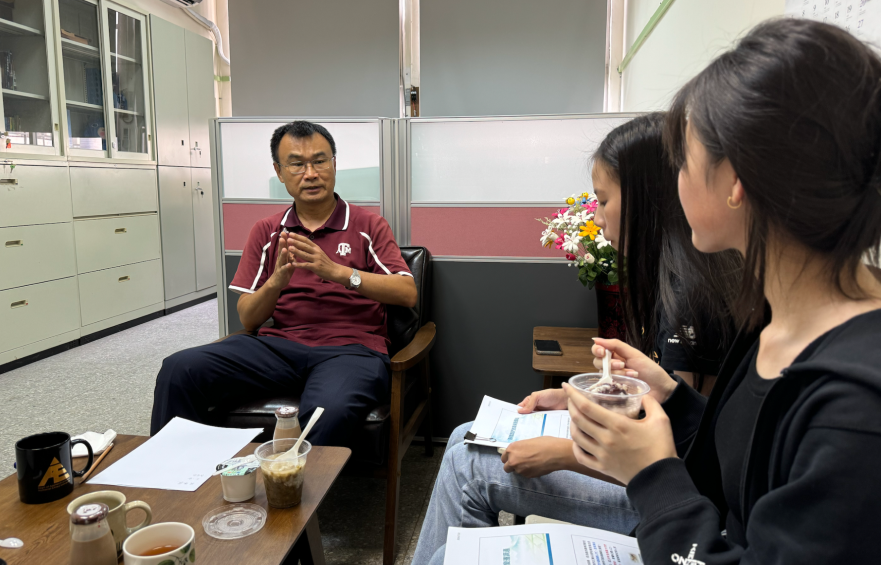
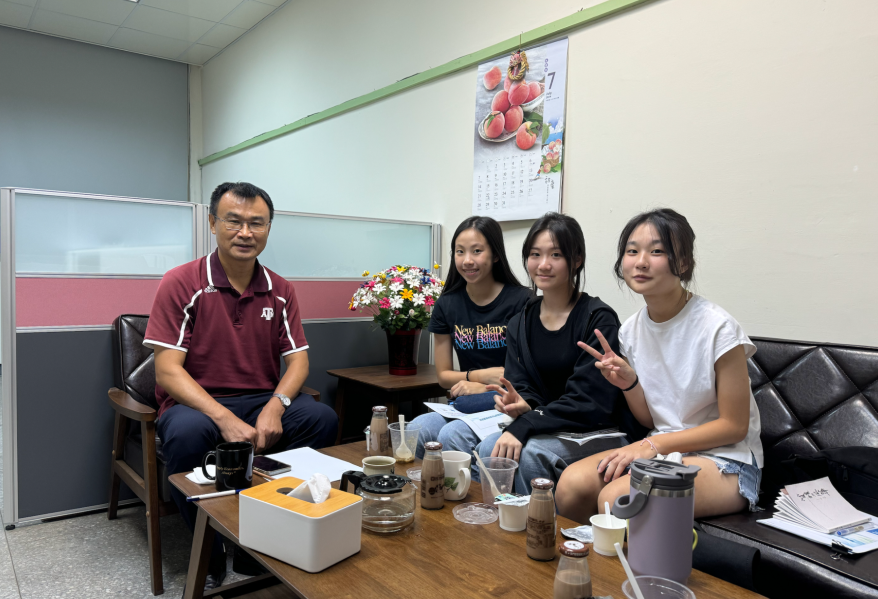
|
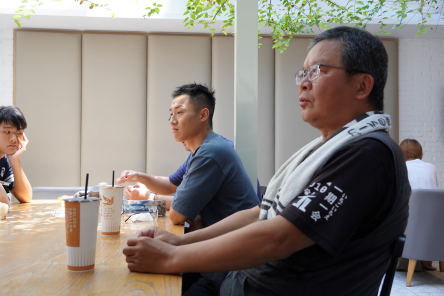
| Figure 1. Interview with Mr. Chi-Chung Chen |
Mr. Chi-Chung Chen said that Taiwan has also improved its ability to withstand adversity. For example, "Horai rice" originated from Japan. Because Kyushu is becoming more and more like Taiwan, rice from Taiwan is shipped back to Japan to develop new varieties. Our products are also the research and development of new varieties. These new technologies, such as the use of Wimbledon chambers, have increased costs. Information value and weather information can be deployed in advance. From the government's perspective, we should formulate better policies to increase prices, carbon footprints, and consumption between industries. One problem is that there is no agricultural education, which also leads to consumers not knowing the reasons for market changes. Education is needed for consumers to understand.
At first, farmers were resistant to planting new varieties, because farmers have certain habits and it takes time to understand how to adapt to new plants. In addition to this, farmers are unwilling to buy insurance and are unwilling to change because they find it troublesome. The same goes for water resources. Groundwater is over-extracted for rice cultivation. More than 200,000 hectares of fields need to provide 75% of the underground water layer. Rainfall and the cultivation of rice fields will add groundwater to prevent the subsidence of the ground. It is not farmers but excessive extraction of groundwater by industry that causes subsidence. Another one is the animal strategy, switching to closed housing because of too much heat. The facilities are upgraded to extremely high production, and the government also tries to minimize environmental impact, such as odor, poop on the roadside, etc. Now we will also turn excrement into energy to reduce the use of fossil energy. Reduce pollution and protect our Earth.
Xiluo Farmers Association
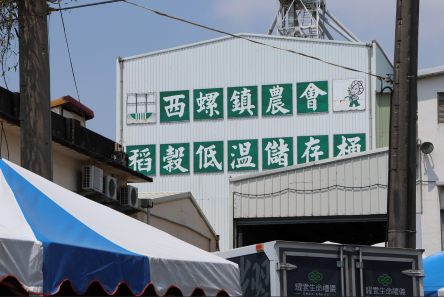
The Xiluo Farmers Association is mainly responsible for rice collection, rice storage, air-drying, cold storage, natural air-drying and other matters. They will also reuse the rice husks and burn them. When dried as fuel, the burned impurities will be reused and sprinkled on the farmland. When they are fallow, they will be used to replace new soil, and the rice roots can also nourish the soil. The amount of rice is now decreasing because farmers are converting their farmland to vegetables. Moreover, the money earned from selling rice is less than that from selling vegetables and fruits.
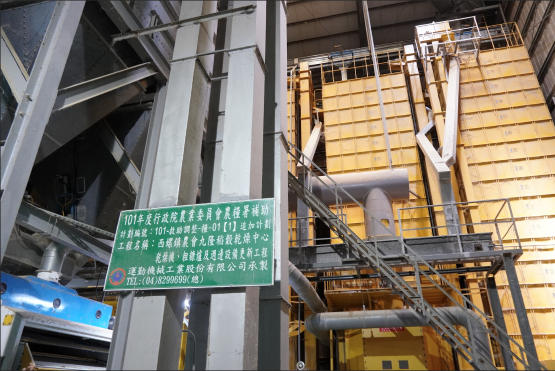
|
|
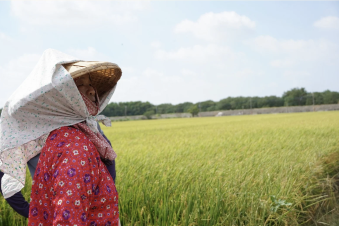
| Figure 2. Rice dryer and the place where the rice is stored | Figure 3. Farmer grandma and the rice field where she works. |
A member of the Xiluo Farmers Association said, "Nowadays, young people tend to plant vegetables more often. In addition to making money, planting time is also faster. However, rice cultivation is basically done by the elderly, about 70-80% of them are elderly." The economic volume is higher and the price is lower because of mechanization. Vegetables are harvested faster, so more people grow them. Growing vegetables and fruits is tiring because they are harvested manually and grown in greenhouses. Because rice is easier to harvest through mechanization, it has also begun to be refined.
|
|
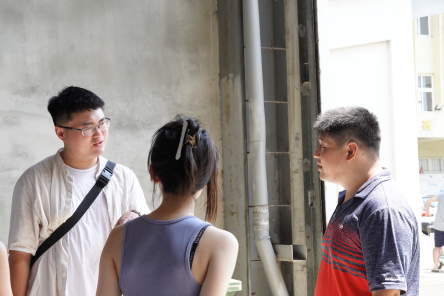
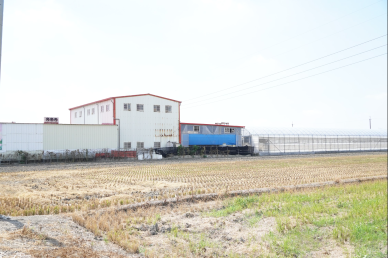
| Figure 4. Interviewing staff from the Xiluo Farmers Association in detail about rice | Figure 5.In the front of this photo, the rice is harvested, and in the back is the greenhouse. |
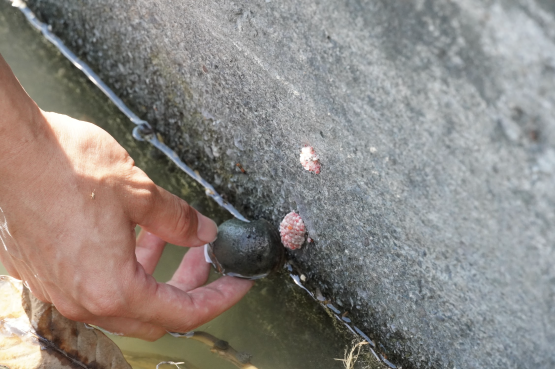
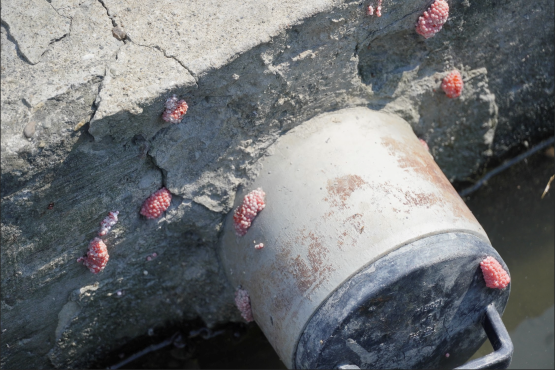
We also asked members of the Xiluo Farmers Association about climate change, but in fact the weather is getting hotter and hotter, but it has little impact on rice. Rice is more resistant to heat, but rice has water channels and is more troublesome due to water shortages, including typhoons. Regarding the problem of apple snails, it is more serious in Chiayi and Tainan, Taiwan, mainly because they use ditch water to grow them. Taiwan's Yunlin is less serious because it uses groundwater. There are many apple snails in the ditch.
|
| Figure 6. Apple snails and apple snail eggs. These apple snails and apple snail eggs are all on the ditch walls. |
Vegetables will not develop well if it is too hot or too cold, so they actively build greenhouses. Greenhouses are easier to control and can dissipate heat as they are less exposed to the sun. Vegetables will be replanted after one or two periods of planting, because soil, pests and diseases, and pesticides will not affect rice. As for fruits, there are also genetic modifications, such as the combination of two different fruits. Fruits are grown in season. The question of whether fruits and vegetables are delicious or not is because not every season and weather conditions allow them to be grown. The more greenhouses there are, the less rice will be produced. The less rice is produced, the more expensive it will be. The more delicate the fruits and vegetables, the more expensive they will be.
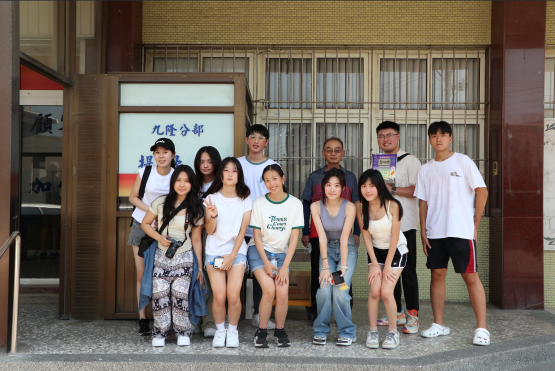
Fruit and vegetable market
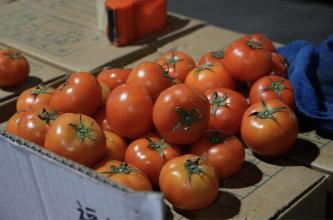
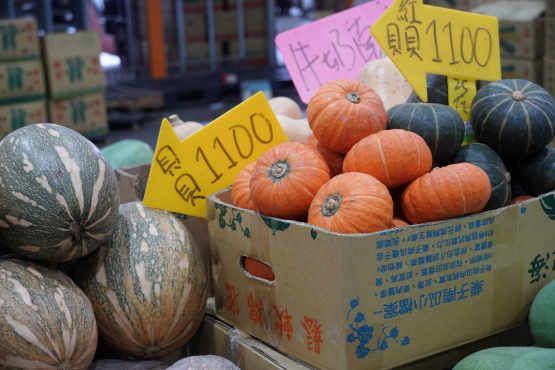
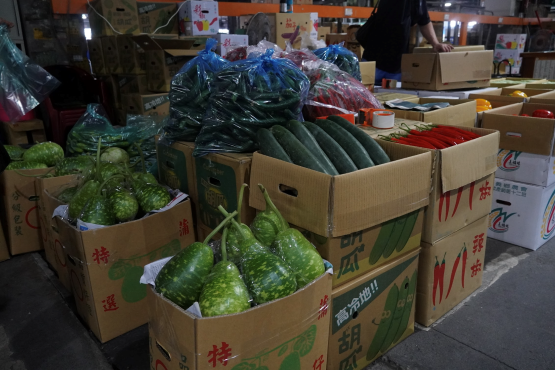
Afterwards, we visited Taiwan's Yunlin Fruit and Vegetable Market to speak with the administration there. He's said that when it rains, the vegetables decay and become less plentiful. Since greenhouses are so expensive, very few vegetables are actually grown there. Most vegetables are utilized in net chambers because of their ability to keep insects out. They sell fewer fruits and more vegetables. Once every three years, rice is left fallow, while fruits and vegetables just need to be rotated into new types.
|
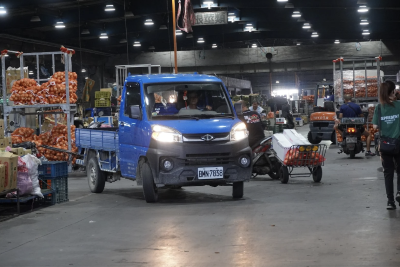
| Figure 7. The interior of the fruit and vegetable market, where many merchants are selling their fruits and vegetables. |
The small Farmer of Yunlin
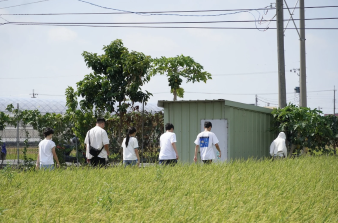
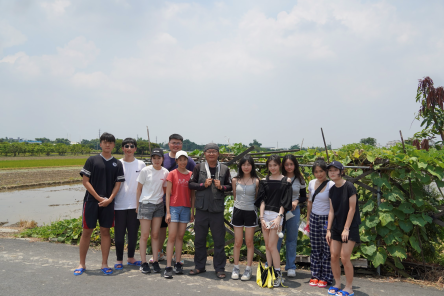
On the way, we also went to see a farmer who had worked in Yunlin for many years. He has also been to Japan and seen many planting techniques, so he also has sufficient knowledge. We also asked him about some difficulties he faced in planting, as well as what he encountered and experienced during the planting process. Let’s learn more about what happens to small farmers when they grow crops, and the problems it poses to climate change. We also personally went to his fields to see where he planted to better understand the farmer's planting environment.
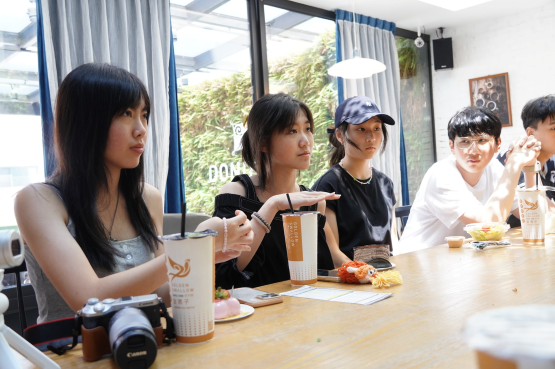
Gu-Quan Coffee Manor, Mr. Liu Yiteng (Valley Springs Coffee Estate)
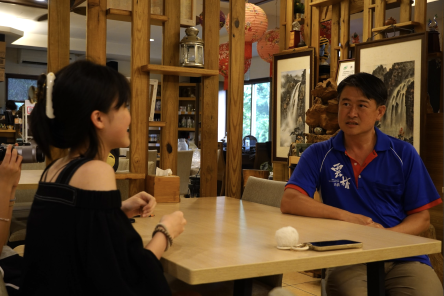
"Guquan Coffee Manor" located in Gukeng, Yunlin, is run by the third-generation coffee farmer Mr. Liu Yiteng. Mr. Liu is the leader of the coffee production and marketing team in Gukeng Township and is one of the spokespersons for the 2014 Taiwan Coffee Festival.

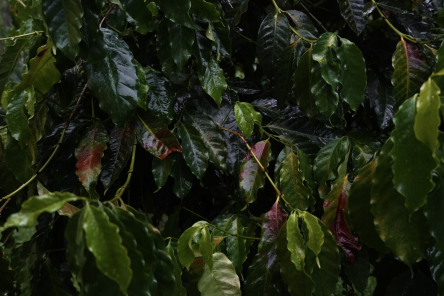
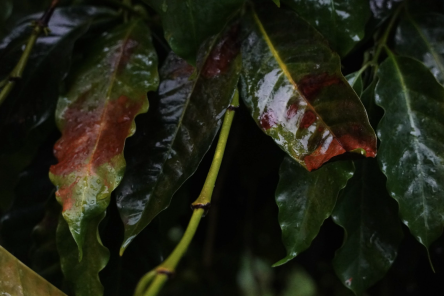
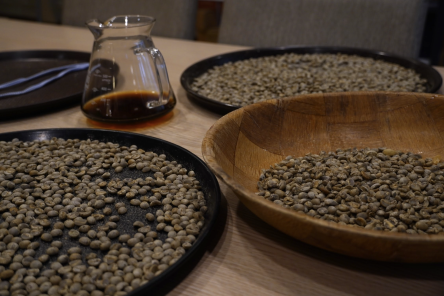
We asked the small farmer owner of Gukeng Coffee, and he told us a lot about coffee. For example, suitable places for growing coffee are between the Tropic of Cancer and the Tropic of Capricorn, and at high to medium altitudes. There are three methods for coffee cultivation by small farmer owners: full sun, half sun, and full shade. Taiwan has a large temperature difference between day and night, so it is easier to grow coffee. However, in recent years, because of the hotter climate, coffee that is exposed to full sunlight has been sunburned.
|
| Figure 8. how the coffee bean leaves are sunburned. Many brown areas are sunburned locations. |
From August to September, the skin of coffee becomes thinner, causing sunburn. Sunburnt leaves will not be able to photosynthesize, and beans will be sunburned. Couldn't be more mature. All unshaded areas were sunburned, resulting in a 10-20% reduction in coffee production. Semi-shade is slightly better. There is only 20% full shade, mainly because there is not enough sunlight. Overall, the decline in coffee is due to global warming. There was no choice but to start coffee cultivation towards higher altitudes. Coffee cannot withstand heat and can be grown between the snow line and frost line. If the climate is hot and it rains, the coffee will grow faster, and the density and hardness of the coffee will be loose. The higher the altitude, the harder it is, and low-altitude pine cannot produce the quality of high-altitude pine.

Coffee is not stable enough and is too fragile. It is easy to collapse when encountering extreme weather conditions, and economic income is easily affected. Lack of competitiveness because quality cannot make up for labor costs, resulting in fewer people supporting domestic production. Coffee blooms five times a year and relies on medicine to adjust the ripeness, so manual harvesting is expensive.
Tri-Small Market, Ms. Li Yiqian
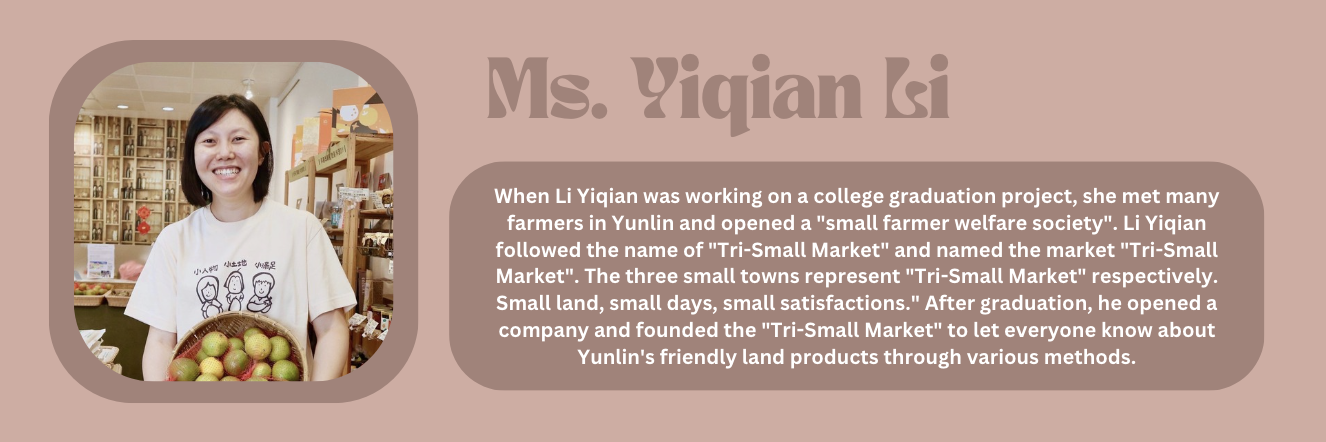
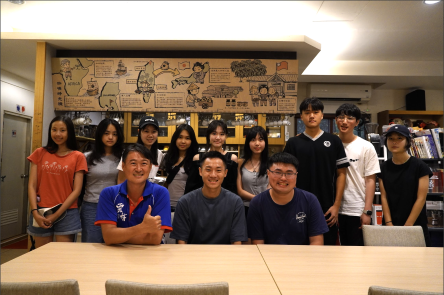
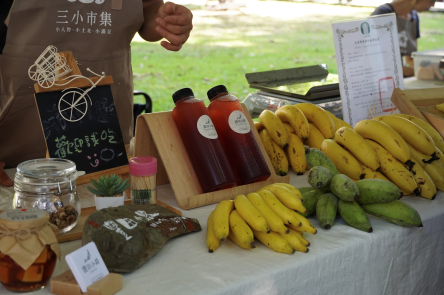
When Li Yiqian was working on a college graduation project, she met many farmers in Yunlin and opened a "small farmer welfare society". Li Yiqian followed the name of "Tri-Small Market" and named the market "Tri-Small Market". The three small towns represent "Tri-Small Market" respectively. Small land, small days, small satisfactions." After graduation, he opened a company and founded the "Tri-Small Market" to let everyone know about Yunlin's friendly land products through various methods.
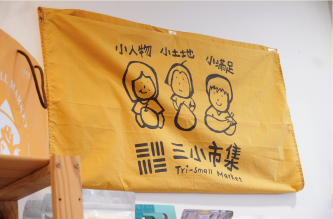
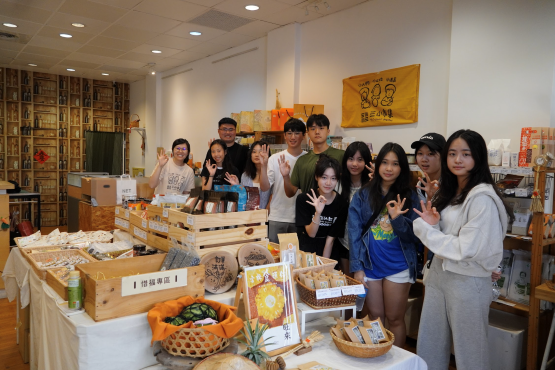
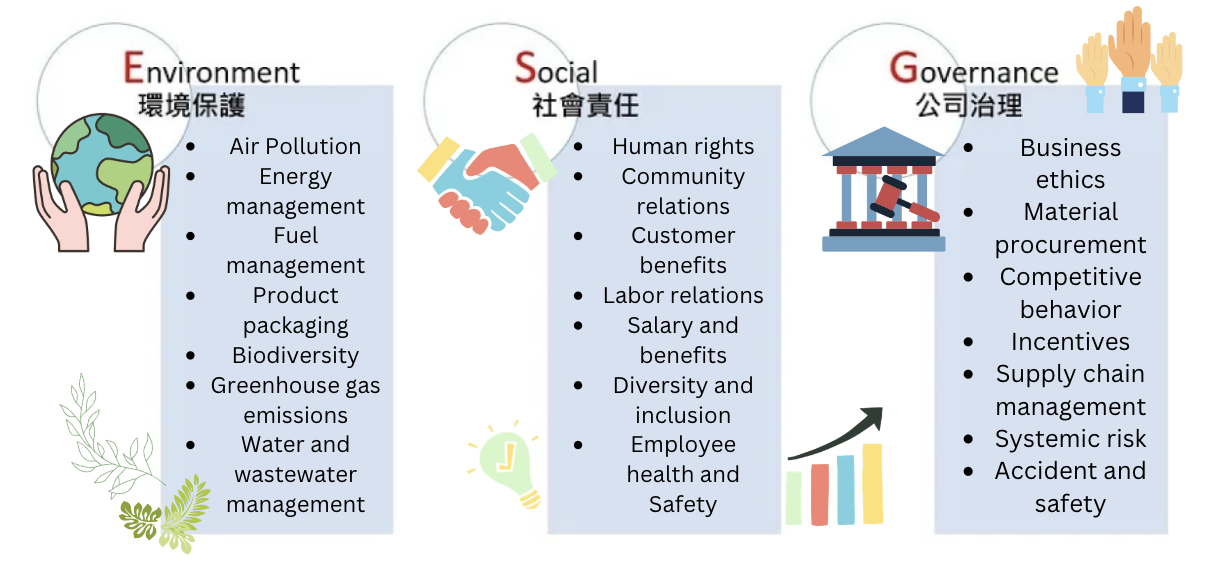
Finally, we interviewed the person in charge of Tri-Small Market Company. She explained to us about environmentally friendly farmer cooperation and the great impact of climate change on farmers. Collaborate on product development and corporate ESG. ESG refers to environmental protection (E, environment), social responsibility (S, social) and corporate governance (G, governance). The United Nations Global Compact (UN Global Compact) first proposed the concept of ESG in 2004 and is regarded as a tool for evaluating a company. indicators of business operations.
Climate change affects businesses, and power outages occur due to rising temperatures, resulting in insufficient electricity. These are things that even spraying medicine can't solve, because it's the weather. Although there is a problem of climate change, from an agricultural perspective, better cultivation methods are used in the natural environment.
|
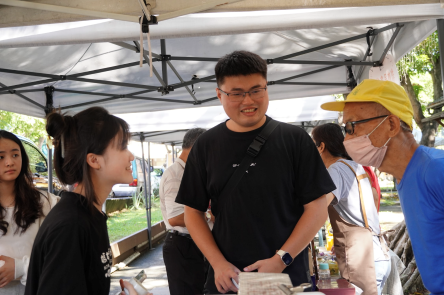
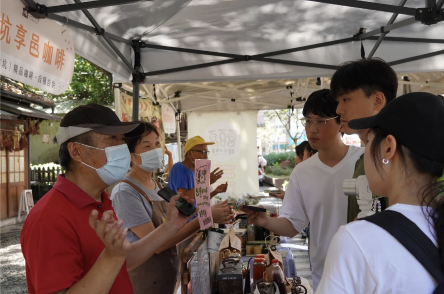
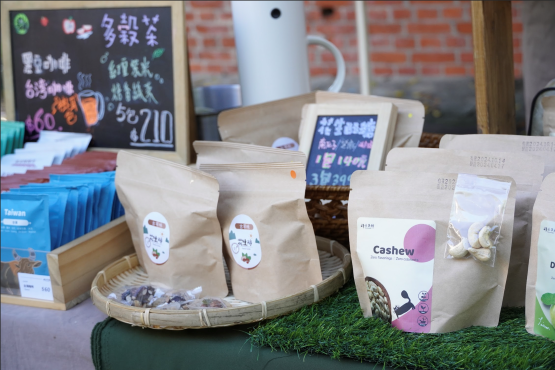
| Figure 9. We divided into groups to visit other small farmers working in the Tri-Small Market to learn about their cultivation and products. |
Final summary
After all the inquiries, we learned that "climate change" has a great impact on the world. It’s not just agriculture. No matter which aspect it is, it is a very serious global problem. For the sake of our planet, we still hope that our products can help farmers in Kenan and the people of Taiwan. We hope to do our part to help our little corner of the world. Given the chance to change, we are willing to do whatever it takes to protect our only planet.